Zhengzhou Zhongkeda Refractory Materials Co., Ltd
Lightweight Mullite Brick & Insulating Fire Brick in the USA
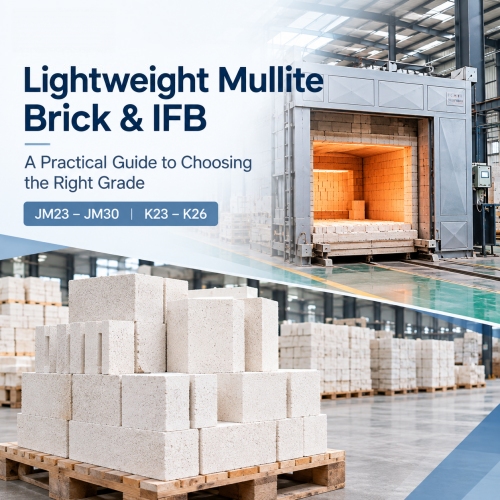
When sourcing high-temperature insulation materials in the United States, buyers may come across different product names such as lightweight mullite brick, insulating fire brick (IFB), lightweight refractory brick, furnace insulation brick, and grades such as JM23, JM26, JM28, JM30, K23, K25 and K26.
Although these products are all used for high-temperature insulation, they are not necessarily identical.
The right choice depends on more than the maximum temperature rating. Bulk density, thermal conductivity, mechanical strength, chemical composition, installation position and actual operating conditions should all be considered.
This guide explains lightweight mullite bricks and insulating fire bricks commonly encountered during product selection, with a focus on the JM23–JM30 range and K-series grades such as K23–K26.
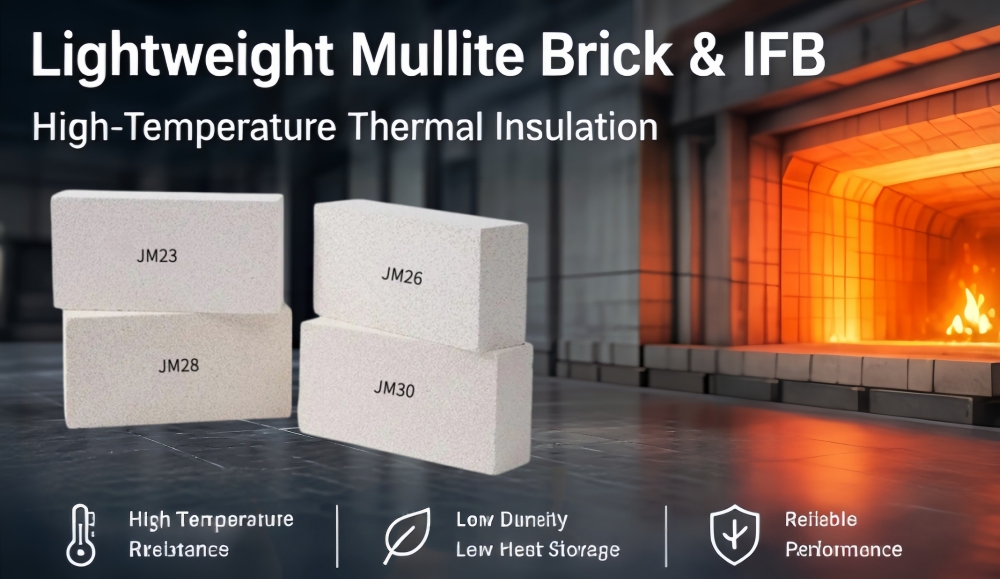
What Is Lightweight Mullite Brick?
Lightweight mullite brick is a lightweight refractory product designed to provide high-temperature insulation while reducing heat storage and heat loss.
Mullite-based materials are valued for their high-temperature stability, while the lightweight porous structure helps reduce bulk density and thermal conductivity compared with dense refractory bricks.
For this reason, lightweight mullite bricks are often considered for applications where both temperature resistance and thermal insulation are important.
Typical applications include:
• Industrial furnaces
• Ceramic and pottery kilns
• Heat-treatment furnaces
• Laboratory furnaces
• Kiln insulation
• Furnace backup insulation
• Non-ferrous metal processing equipment
• High-temperature thermal processing equipment
In practice, you may see the same general product category described using several different terms:
Lightweight Mullite Brick
Mullite Insulating Brick
Insulating Fire Brick (IFB)
Lightweight Refractory Brick
High-Temperature Insulation Brick
These terms can overlap, but the actual technical properties still need to be checked before selecting a product.
Lightweight Mullite Brick vs. Dense Refractory Brick
One of the easiest ways to understand lightweight mullite brick is to compare it with dense refractory brick.
|
|
Lightweight Mullite Brick |
Dense Refractory Brick |
|
Main purpose |
Thermal insulation |
Hot-face protection |
|
Bulk density |
Lower |
Higher |
|
Heat storage |
Lower |
Higher |
|
Thermal conductivity |
Generally lower |
Generally higher |
|
Mechanical strength |
Lower than dense grades |
Generally higher |
|
Typical position |
Insulation / backup |
Hot face / working lining |
|
Typical products |
JM23–JM30 |
High alumina, fire clay, dense mullite |
This does not mean lightweight mullite bricks are simply “weaker refractory bricks.”
They are designed for a different purpose.
In many furnace and kiln designs, dense refractory materials protect the hot face while lightweight insulating materials are used behind the working lining to reduce heat loss.
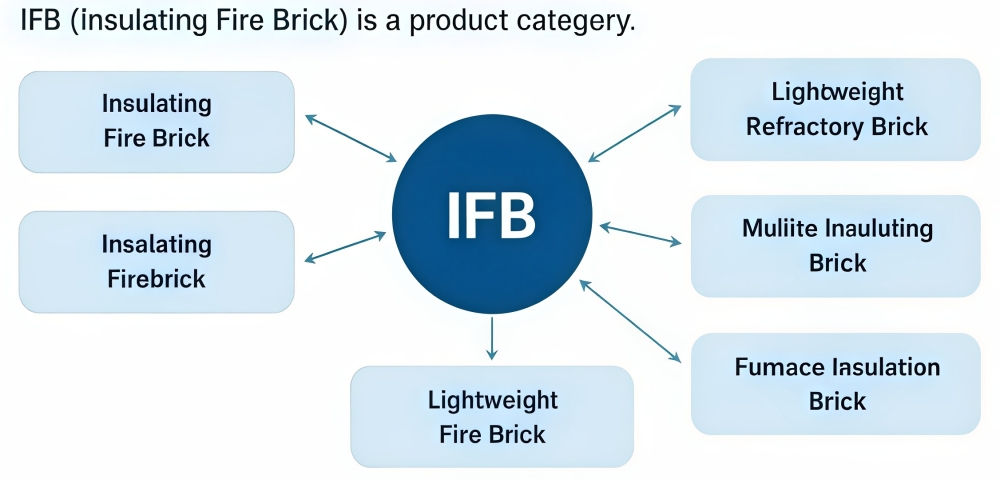
What Does IFB Mean?
IFB stands for Insulating Fire Brick.
The term is widely used for lightweight refractory bricks designed primarily for thermal insulation.
In the U.S. market, buyers may search for:
• Insulating fire brick
• Insulating firebrick
• IFB
• Lightweight fire brick
• Lightweight refractory brick
• Mullite insulating brick
• Furnace insulation brick
The most important point is that IFB is a product category, while the grade and technical specification determine the actual performance of a particular brick.
For example, K23, K25, K26, JM23 and JM26 should not automatically be considered interchangeable simply because they belong to the same general IFB category.
JM23, JM26, JM28 & JM30 Lightweight Mullite Bricks
ZKD Refractory supplies a range of lightweight mullite insulating fire bricks including JM23, JM26, JM28 and JM30.
The grades cover different temperature, density and strength requirements.
| Grade |
Classification Temperature |
Bulk Density |
Al₂O₃ |
SiO₂ |
CCS |
| JM23 |
1260°C / 2300°F |
0.55–0.65 g/cm³ |
≥37% |
≤48% |
≥1.5 MPa |
| JM26 |
1430°C / 2600°F |
0.75–0.85 g/cm³ |
≥58% |
≤36% |
≥2.0 MPa |
| JM28 |
1540°C / 2800°F |
0.85–0.95 g/cm³ |
≥64% |
≤30% |
≥2.5 MPa |
| JM30 |
1650°C / 3000°F |
1.00–1.10 g/cm³ |
≥73% |
≤22% |
≥3.5 MPa |
These grades provide different combinations of temperature capability, density, chemical composition and mechanical strength.
Therefore, selecting JM23, JM26, JM28 or JM30 should depend on the actual furnace conditions rather than simply choosing the highest temperature grade available.
JM23: Lightweight Insulation for 2300°F-Class Applications
JM23 is a lightweight mullite insulating brick designed for applications where low density and thermal insulation are important.
With a classification temperature of approximately 1260°C / 2300°F, JM23 can be considered for lower-temperature furnace and kiln insulation applications.
Typical applications may include:
• Pottery kilns
• Laboratory furnaces
• Backup insulation
• Furnace sections where low heat storage is required
JM23 is often a practical starting point when the application does not require a higher-temperature grade.
JM26: 2600°F-Class Lightweight Mullite Brick
JM26 provides a higher temperature capability and higher density than JM23.
It can be considered for applications such as:
• Industrial furnaces
• Ceramic kilns
• Heat-treatment equipment
• High-temperature insulation zones
• Furnace backup insulation
For customers replacing an existing IFB, the actual density and thermal conductivity requirements should be checked before selecting JM26.
JM28 and JM30 for Higher-Temperature Applications
For applications requiring higher classification temperatures, the JM series extends to JM28 and JM30.
JM28
JM28 is classified around 1540°C / 2800°F and is designed for higher-temperature insulation requirements.
JM30
JM30 reaches approximately 1650°C / 3000°F classification temperature and is intended for more demanding high-temperature insulation applications.
The higher classification temperature does not automatically make JM30 the best choice.
If a furnace operates at a lower temperature, using a higher-grade brick may not provide a practical advantage if other properties such as density, thermal conductivity, mechanical strength or cost are more important to the application.
K23, K25 and K26 Insulating Fire Bricks
For buyers in the United States, another group of grades commonly encountered is the K-series insulating fire brick.
Morgan Thermal Ceramics' published K-series information includes K23, K25 and K26. Its datasheet lists classification temperatures of approximately 1315°C (2400°F), 1370°C (2500°F) and 1430°C (2600°F), respectively.
The published K-series density values also increase across the grades, illustrating that temperature classification and density are both important when comparing IFBs.
For a U.S. buyer, these grades may appear in existing furnace specifications, replacement requirements or previous purchase records.
However, a product grade alone should not be used as proof that two products from different manufacturers are technically identical.
K23 vs. JM23: Are They the Same?
This is one of the most important questions when comparing IFB products.
K23 and JM23 should not automatically be treated as exact equivalents.
Even when two products are intended for similar applications, their:
• Bulk density
• Chemical composition
• Thermal conductivity
• Cold crushing strength
• Permanent linear change
• Pore structure
• Manufacturing process
may be different.
For example, published manufacturer data shows differences between K23 and JM23 in classification temperature and density.
This means that when replacing an existing K23 with a JM23 or another manufacturer's product, the correct approach is to compare the complete technical specification, rather than matching the product name alone.
K26 vs. JM26: Why the Datasheet Matters
The same principle applies to K26 and JM26.
Both are associated with the approximately 2600°F / 1430°C class of insulating fire brick, but similar temperature classification does not mean identical physical properties.
For a K26 replacement or alternative sourcing project, buyers should compare:
| Property |
Why It Matters |
|
Classification temperature |
Indicates high-temperature capability |
|
Bulk density |
Influences insulation, heat storage and strength |
|
Thermal conductivity |
Important for heat-loss calculations |
| CCS |
Important where mechanical load is present |
|
Chemical composition |
Helps evaluate material compatibility |
|
Permanent linear change |
Important for dimensional stability |
|
Dimensions |
Important for installation |
|
Test standard |
Ensures data is being compared consistently |
This is why “same temperature” does not necessarily mean “same product.”
How to Choose the Right Lightweight Mullite Brick
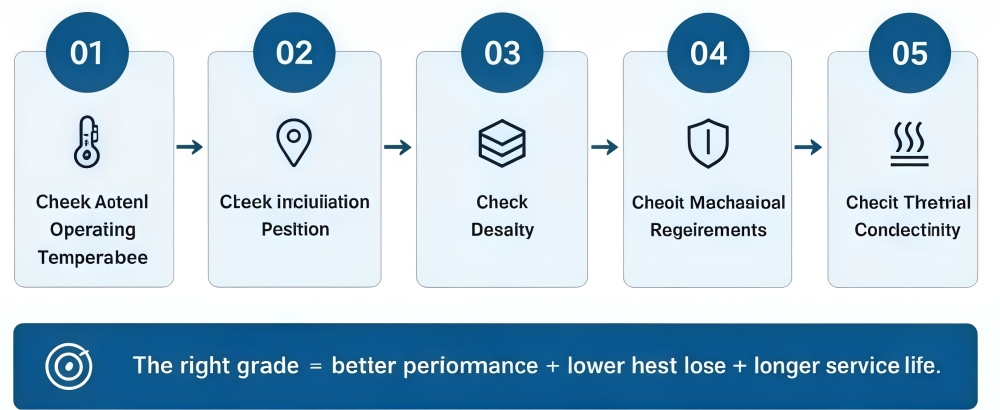
When selecting a lightweight mullite brick or IFB, temperature should be the starting point—not the only criterion.
1. Check the Actual Operating Temperature
Start with the normal working temperature.
The maximum temperature of the furnace is not always the actual temperature experienced by the insulating brick.
2. Check Where the Brick Is Installed
The same furnace may contain different refractory materials in different locations.
Ask whether the IFB is being used as:
• Hot-face material
• Backup insulation
• Furnace wall insulation
• Roof insulation
• Door insulation
• Kiln lining
• External insulation layer
The installation position can significantly affect the required grade.
3. Check Density
Density is particularly important when replacing an existing IFB.
A replacement product with a significantly different density may also have different thermal conductivity and mechanical properties.
If you already have an existing product, providing its density is extremely useful.
4. Check Mechanical Requirements
Lightweight insulation materials are generally not selected for the same mechanical duties as dense working-lining bricks.
If the brick will experience mechanical loading, vibration or physical contact, strength requirements should be considered carefully.
5. Check Thermal Conductivity
For an insulation project, thermal conductivity can be more useful than classification temperature alone.
A buyer looking to reduce furnace shell temperature or energy loss should evaluate thermal conductivity at the relevant temperature range.
What Information Should You Send Your Refractory Supplier?
If you are looking for a lightweight mullite brick or IFB replacement, you do not necessarily need to know the exact new grade before contacting a supplier.
Providing the following information is usually more useful:
Existing grade: K23, K25, K26, JM23, JM26, etc.
Operating temperature: actual working temperature
Dimensions: standard or custom
Bulk density: if available
Application: furnace, kiln, heat-treatment equipment, etc.
Installation position: hot face, backup insulation, roof, wall, door, etc.
Current datasheet: if available
A current supplier's datasheet can often provide enough information for a manufacturer to identify a suitable product for comparison.
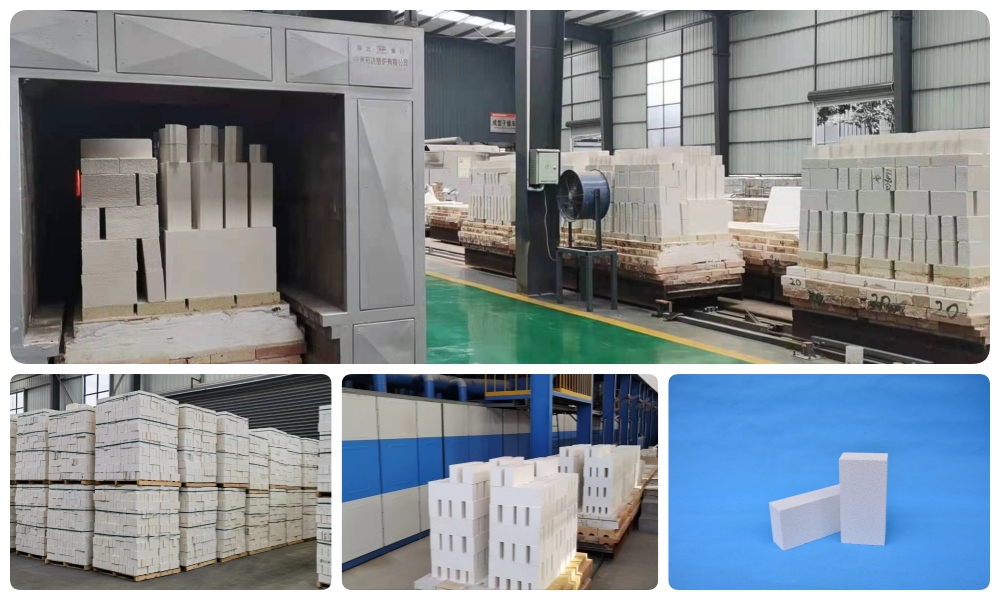
ZKD Refractory manufactures lightweight mullite insulating fire bricks for high-temperature furnace and kiln applications.
Our JM-series range includes:
JM23 | JM26 | JM28 | JM30
The range covers approximately 2300°F to 3000°F classification temperatures, with different density, composition and strength levels.
We can supply:
• Standard sizes
• Custom dimensions
• Different density grades
• Technical datasheets
• Export packaging
• Factory-direct production
As a refractory manufacturer, we focus on matching the product to the actual application rather than simply recommending a grade based on temperature.
Looking for a K23, K25, K26 or JM-Series Alternative?
If you are currently sourcing lightweight mullite bricks or insulating fire bricks in the USA, send us your existing:
Grade + dimensions + density + operating temperature
Or simply send us your current datasheet or specification.
We can review the requirements and identify the closest available product from our JM-series range.
JM23 | JM26 | JM28 | JM30
Factory Direct · Custom Sizes · Technical Support
Send Your Requirements → Get a Grade Recommendation